





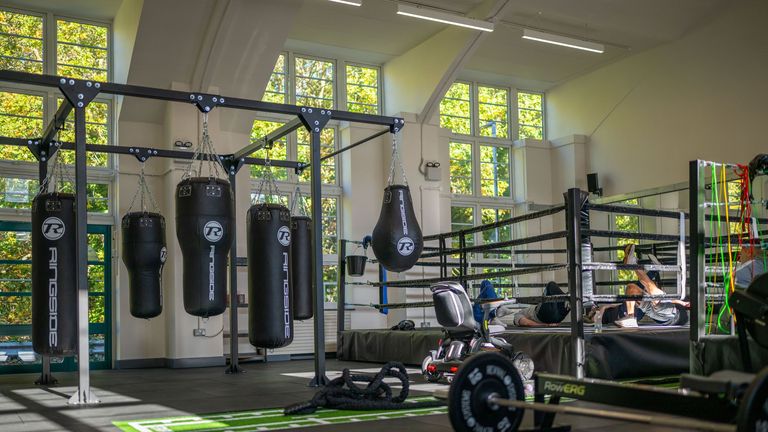
For the first time in the UK a boxing gym has been opened in an NHS facility with the Oxleas NHS Foundation Trust giving mental health charity Off The Ropes a long-term base.
The Trust, which provides a wide range of health and social care services in South East London, has granted Off The Ropes a 10-year lease, making Goldie Leigh the first NHS site to host a dedicated boxing facility.
Off The Ropes was founded by Warren Dunkley, a former boxer who has worked as an occupational therapist for 25 years with patients facing severe and enduring mental illness.
Dunkley began to use non-contact boxing training to help patients that led to him setting up the charity.
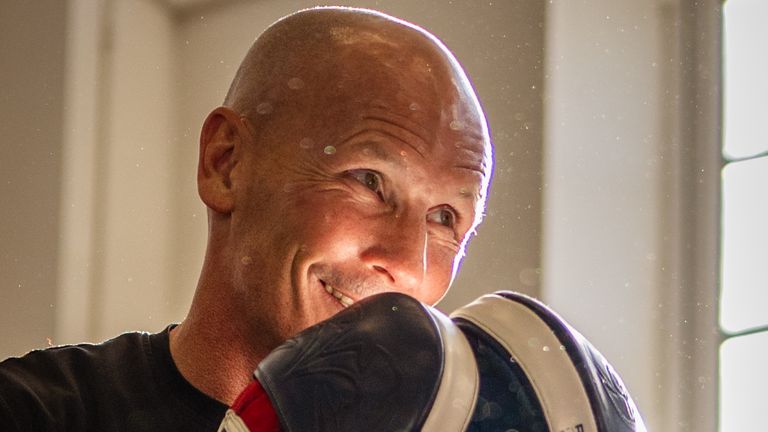
"When I've used it [boxing training] on the wards, the nurses can see if I've got a client that's nervous or has pent-up energy, we can use pads," Dunkley told Sky Sports. "With a lot of our clients they get put on anti-psychotic medications, they get told to lose weight, they've got no motivation to lose weight.
"Through boxing trainers get close to their clients, we work with them on some drills and we build up a relationship and they seem to want to keep coming back and keep coming back and seeing us. So we can really help them out on their physical health goals.
"That then fits really well because they're quite isolated as well. Then they've suddenly got more purpose to go somewhere in the week. So we start to tick some boxes with some social goals as well. They start making friends at the gym."
Boxing's effectiveness as a therapeutic intervention is well-established in research. Studies show it reduces depression, improves self-esteem, concentration and "self-agency", and reduces both aggression and anxiety.
The new gym in an NHS facility will enable the charity to significantly expand its reach, providing support for both inpatients and outpatients.
It will serve mental health service users as well as young people, individuals with learning disabilities, and those living with Parkinson's, dementia, and other neurological conditions.
"Start doing some pads and we can start speaking about all other parts of someone's life," Dunkley said. "With the mental health clients it's about trust and building up a relationship. A lot of my clients don't trust people within services maybe. They get moved around from team to team.
"We're a more stable anchor for them. That helps them feel they're being part of something, which is really important.
"Just showing how having a methodical, hard work ethic about doing stuff gets you results. Whether that result is about getting just a little bit fitter, maybe going out once or twice more in the week, start to volunteer for a job somewhere and starting to maybe even look at employment and integrating back into mainstream society."


